

Best Crusher for Iron Ore Processing
Iron ores with high hematite concentration (over 60% iron) are called "natural ore" or DSO (Direct Shipping Ore). These can be charged directly into Blast Furnace-Basic Oxygen Furnace (BF-BOF) steelmaking. Lower-grade ores, however, require multi-stage crushing and screening to liberate iron minerals from waste rock.
1. Jaw Crushers
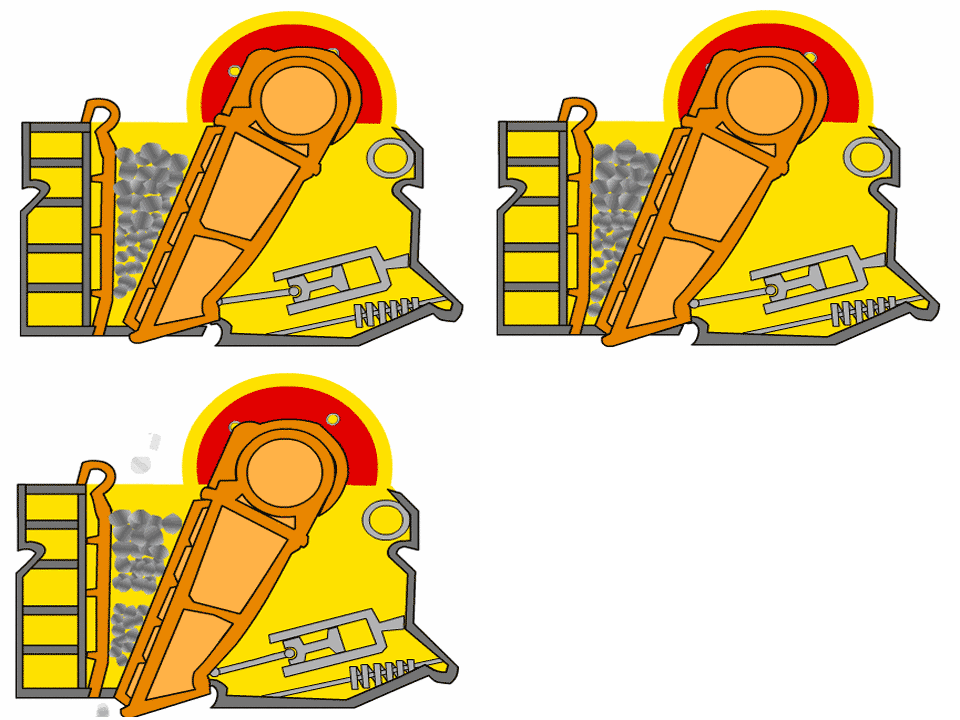
Up to 1,600 TPHJaw crushers operate via a compressive action between a fixed jaw and a moving jaw driven by an eccentric shaft. Highly reliable for primary crushing in small-to-medium mining projects. Using vibrating grizzly screens prior to the jaw crusher removes pre-sized fines to maximize throughput.
2. Gyratory & Cone Crushers
1,200 – 5,000+ TPHGyratory crushers handle massive feed sizes with continuous oscillation for ultra-high tonnage primary crushing. Cone crushers utilize a bowl liner and moving mantle for secondary and tertiary reduction with selectable chamber profiles for specific feed grades.
3. Horizontal Shaft Impact Crushers (HSI)
High Reduction RatioUtilizes high-speed blow bars on a horizontal rotor to shatter iron ore against breaker plates, yielding high reduction ratios and highly cubical product particles.
Call +91 82409 38968 to get a quote for a Crusher machine
Operational Best Practices: Choke Feeding
To maintain maximum crushing efficiency and uniform liner wear, crushers must operate in a "choke-fed" condition (keeping the crushing chamber consistently filled). Upstream surge bins, stockpiles, and automated feeder controls regulate material levels in real time.
Call +91 82409 38968 to Get a Quote for a Crusher Machine
Speak directly with HPPA engineers to design efficient primary, secondary, and tertiary iron ore crushing circuits.
Have questions about your stone crushing project?
Our HPPA engineering experts are here to help you select the perfect equipment configuration and plant layout for your capacity targets.


